
OUR MISSION IS TO TAILOR FOR EACH CLIENT A BEAUTIFUL, FUNCTIONAL AND ENDURING OUTDOOR ENVIRONMENT THAT WILL PROVIDE A PLACE OF SERENITY FOR FRIENDS AND FAMILY TO APPRECIATE FOR YEARS TO COME.

BuildCal Landscape Outdoor Living Article
Outdoor Fire Pit Planning: Location, Safety & Materials
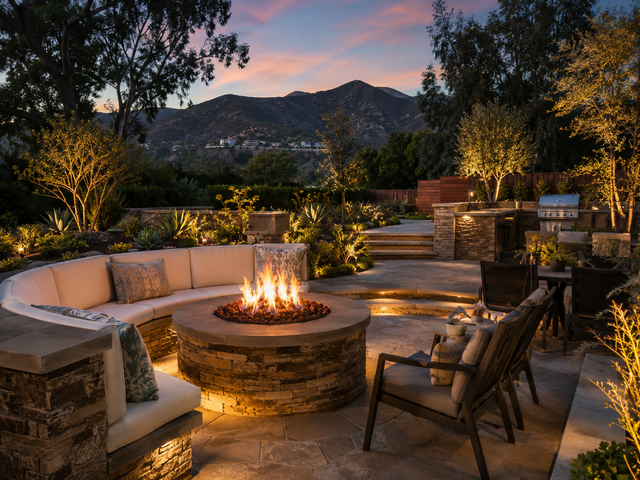
A fire pit is one of the most rewarding backyard upgrades — a warm gathering point that extends your evenings outdoors. But in Southern California, where fire risk is real and local rules apply, a fire pit deserves genuine planning, not just a spot on the patio. Getting an outdoor fire pit Glendale homeowners can enjoy safely comes down to the right fuel, the right placement, the right materials, and a clear understanding of fire safety.
This guide walks through gas versus wood, placement and setbacks, materials, safety, and integrating seating. For the bigger picture, explore our outdoor living and design services, and read on.
Gas vs Wood
The first decision shapes everything else. In the gas vs wood fire pit choice, each has a clear character.
A gas fire pit (natural gas or propane) lights instantly, offers a controllable flame, and produces no smoke, ash, or sparks. That makes it cleaner, easier to live with, and far simpler to operate within air-quality and fire-safety rules — which is why it's the most popular choice for Southern California yards. The trade-off is a gas line or tank and a proper burner installation.
A wood-burning fire pit delivers crackle, aroma, and radiant heat that many people love. But it produces smoke, ash, and embers, takes more cleanup, and is more likely to be restricted on no-burn days or in fire-prone areas. For most Glendale, CA yards — especially near the hillsides — gas is the safer, lower-maintenance option, though a well-sited wood pit can work where rules allow.
Placement & Setbacks
Where a fire pit goes is a safety decision first and a design decision second. The guiding principle is generous clearance from anything that can burn.
- Keep the fire pit well clear of the house, fences, eaves, overhanging branches, and other combustibles - a clearance of around ten feet is a commonly cited minimum, but confirm the requirement locally.
- Set it on a level, non-combustible base - never directly on a wood deck or dry grass.
- Avoid placing it under low branches or a covered patio unless the structure is specifically rated for it, and position it so smoke drifts away from seating, windows, and neighbors.
- Note hillside restrictions: parts of Glendale fall within Very High Fire Hazard Severity Zones, where open flame and wood burning may be limited or prohibited.
Because rules vary by location and zone, always confirm setbacks and any permit or restriction with the City of Glendale Fire Department and building and safety division before building. This same plan-ahead approach applies to permits on structures.
Materials
A fire pit has to be built from materials that withstand intense, repeated heat without cracking or failing.
- Fire-rated core. Fire brick or a refractory liner, or a steel or stainless insert or bowl, contains the heat safely.
- Surround. Concrete block faced with stone veneer, natural stone, or heat-resistant brick forms the visible structure.
- Surface and base. Non-combustible pavers or stone around the pit, on a solid, level base.
- Gas components. For a gas pit, a proper burner kit with lava rock or fire glass and a code-compliant connection.
Choosing materials suited to heat and the climate matters — the logic in our guides to hardscaping materials for the local climate and paver materials applies here. For design inspiration, see our looks at fire pit designs, fire pit designs for nearby homes, and building a fire pit.
Safety
Good fire pit safety is mostly common sense applied consistently — and it's non-negotiable in a fire-prone region.
- Maintain full clearance from structures, furniture, and overhead branches, and keep the surrounding area free of dry vegetation and debris.
- Never leave a fire unattended, and keep water, sand, or an extinguisher within reach.
- For wood pits, use a spark screen to contain embers; for gas, ensure proper connections and an accessible shutoff.
- Don't use a fire pit on red-flag, high-wind, or no-burn days, and supervise children and pets at all times.
Air-quality rules from the South Coast Air Quality Management District can include no-burn days, and the local fire department sets the rules during high fire-danger periods — checking both before lighting a wood fire is part of responsible use.
Integrating Seating
A fire pit is at its best as the heart of a gathering space. Wrapping seating around it — at a safe distance — turns it into a true destination.
Build a built-in seat wall or lounge around the pit in a conversational circle or U, set back far enough to be comfortable and safe. Tie it into the surrounding patio and layer in outdoor lighting so the area works all evening. Paired with an outdoor kitchen, a fire feature completes a backyard entertainment space.
Plan Your Fire Pit the Right Way
A well-planned fire pit is safe, code-compliant, and built to be the centerpiece of your yard. Plan Your Outdoor Kitchen and fire feature with us, and we'll assess placement, fuel, materials, and local requirements for your Glendale, CA home. Call +1 (818) 303-1570 or contact us to get started, and see finished features in our portfolio.
Frequently Asked Questions
Are fire pits allowed in Glendale, CA?
Generally yes, but with rules. Gas fire pits are widely allowed and easiest to use within local regulations, while wood-burning pits can be restricted on no-burn days and in fire-prone areas. Parts of Glendale fall within Very High Fire Hazard Severity Zones, where open flame may be limited. Always confirm setbacks, permits, and restrictions with the City of Glendale Fire Department before building.
Is a gas or wood fire pit better?
It depends on priorities. A gas fire pit lights instantly, has a controllable flame, and produces no smoke or ash, making it cleaner, safer, and easier to use within fire and air-quality rules - the popular choice for SoCal. A wood fire pit offers crackle and aroma but more smoke, cleanup, and restrictions. For most Glendale yards, gas is the safer, lower-maintenance option.
How far should a fire pit be from the house?
Keep generous clearance - around ten feet from the house, fences, eaves, overhanging branches, and other combustibles is a commonly cited minimum, though you should confirm the exact requirement locally. Set the pit on a level, non-combustible base, avoid placing it under low branches or unrated covered patios, and position it so smoke drifts away from seating and neighbors.
What are the key fire pit safety rules?
Maintain full clearance from structures, furniture, and branches; keep the area clear of dry vegetation; never leave a fire unattended; and keep water, sand, or an extinguisher nearby. Use a spark screen for wood pits and proper connections with a shutoff for gas. Avoid use on red-flag, high-wind, or no-burn days, and supervise children and pets.
What materials are used to build a fire pit?
A fire pit needs a fire-rated core - fire brick, a refractory liner, or a steel or stainless insert - with a surround of concrete block faced with stone veneer, natural stone, or heat-resistant brick. Use non-combustible pavers or stone around it on a solid base, and for gas pits a proper burner kit. Plan Your Outdoor Kitchen at +1 (818) 303-1570 to build it right.
Thinking about a new outdoor space?
We’d love to hear your ideas. Let’s explore what’s possible—no pressure, just a friendly conversation.
Give us a call:
+1 (818) 303-1570
Frequently Asked Question
WILL YOU WORK WITH MY HOA?
Yes - While individual requirements of HOAs can be as diverse of the properties they represent, a set of established and agreed upon standards must be maintained. We will work closely with your HOA to conform to all specifications and approval processes while bringing out your property's absolute best.